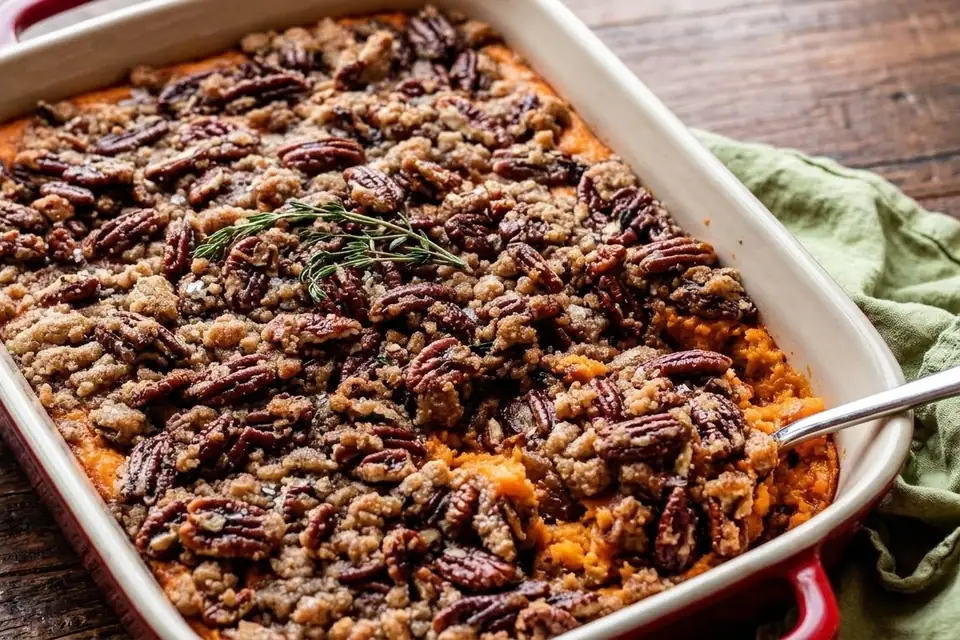
It’s mid-December, and my kitchen smells like cinnamon, brown sugar, and toasted pecans. I’ve got this sweet potato casserole in the oven right now—golden pecans bubbling up around the edges—and honestly, I can’t wait to pull it out.
I’ve made this recipe a dozen times over the years, tweaking it each November until I landed on something that feels both foolproof and genuinely special. The base is silky and lightly spiced, never gummy or oversweetened like some versions I’ve tried.
This is the casserole that disappears first from the holiday table. It’s not fussy, it doesn’t require last-minute fussing, and it tastes even better than it looks. Let me walk you through exactly how I make it.
Why You’ll Love This Recipe
This sweet potato casserole hits every mark: creamy filling, crunchy topping, and totally make-ahead friendly for a stress-free holiday dinner.
- Silky filling with real texture: You’re beating the sweet potatoes just enough to keep tiny chunks intact, so it’s never that sad, uniform mush.
- Crispy pecan streusel that stays crispy: The brown sugar and butter create a golden, crumbly topping that won’t soften into the filling even after cooling.
- Built for make-ahead prep: Assemble it completely the night before, cover it, chill it overnight, then bake straight from the fridge with just 5 extra minutes.
- Holiday table showstopper: It’s elegant enough for a formal dinner, homey enough for a casual buffet, and visually beautiful without looking fussy.
Ingredients & Substitutions
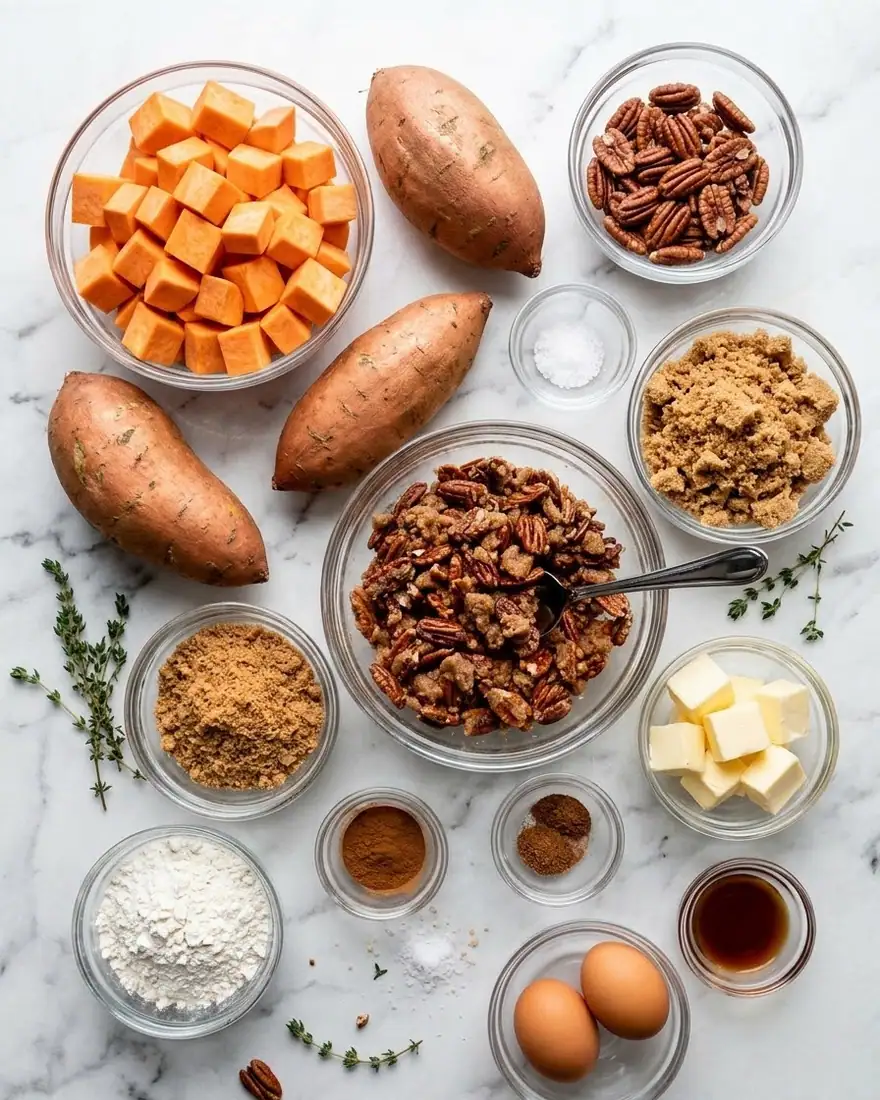
Sweet Potatoes (2 pounds / 908g): I always buy firm, medium-sized sweet potatoes without soft spots. They’ll boil evenly and give you that silky mash without watery breakdown.
Unsalted Butter (1/3 cup melted for base, plus 1/3 cup for topping / 142g total): I reach for Kerrygold or Land O’Lakes unsalted—both have that rich, creamy taste that makes a real difference in the filling and streusel.
Packed Dark Brown Sugar (1/2 cup for base, 1/2 cup for topping / 200g total): Pack it firmly into your measuring cup so you’re not under-measuring. Dark brown gives deeper molasses notes than light brown.
Large Eggs (2, beaten): These bind the filling and create that custard-like texture. Use room-temperature eggs for smoother blending with the other wet ingredients.
Heavy Cream (1/2 cup / 120ml): This keeps the filling from being dense. I use full-fat dairy cream; don’t substitute half-and-half or it’ll be too thin.
Pure Vanilla Extract (1 teaspoon): The real stuff makes an audible difference. Imitation won’t give you those warm, subtle notes underneath the spice and brown sugar.
All-Purpose Flour (1/3 cup / 41g, spooned and leveled): I use King Arthur unbleached all-purpose for the streusel. Spoon into your measuring cup and level off—don’t pack or scoop directly.
Ground Cinnamon (1/2 teaspoon): A small amount that gives warm spice without overpowering the sweet potato flavor. Fresh spice tastes better; check your container’s purchase date.
Pecan Halves (1 and 2/3 cups / 210g): Use halves, not pieces, so they stay visible and crispy on top. Toast them lightly for 3 minutes at 325°F if they smell flat or old.
Salt (1/4 teaspoon for filling, plus flaky sea salt for garnish): Diamond Crystal kosher salt dissolves evenly. The tiny pinch in the filling amplifies every other flavor without tasting salty.
Smart Ingredient Substitutions
Swap: Pecan halves for walnut halves: Use the same weight (210g). Walnuts are slightly earthier but deliver the same textural contrast. Bake time stays identical.
Swap: Heavy cream for evaporated milk: Use the same 120ml. It’s slightly less rich but works in a pinch. The filling will set a touch firmer, which is actually nice for serving.
Swap: Dark brown sugar for light brown sugar: Use the exact same weight. You’ll lose a little molasses depth, but the casserole will still taste delicious and bake exactly the same way.
Swap: Pure vanilla for almond extract: Use only 1/2 teaspoon almond extract (it’s potent) plus 1/2 teaspoon vanilla. This adds a subtle almond note that plays beautifully with pecans.
How to Make It (Step-by-Step)
Step 1 — Boil the sweet potatoes until fork-tender: Place peeled sweet potatoes in a large pot and cover completely with cold water.
Bring to a rolling boil over high heat, then reduce to medium-low and simmer for 20 minutes until fork-tender. Drain thoroughly and cool for 15 minutes until safe to handle.
You’ll know they’re done when a fork slides through the thickest part with almost no resistance. If you’re using extra-large potatoes, check at 18 minutes.
Step 2 — Prep your baking dish and preheat: While potatoes cool, preheat oven to 350°F (177°C). Grease a 9×13-inch baking pan with butter or cooking spray and set aside on the counter.
I use a heavy-gauge aluminum baking dish because it heats evenly and won’t warp. Glass works too, but it heats faster—watch the browning at the edges.
Step 3 — Mash the sweet potatoes to the right texture: Transfer cooled sweet potatoes to a large mixing bowl.
Using a handheld mixer on medium speed, beat until relatively smooth with some small chunks remaining for texture, approximately 2 minutes. You should have about 4 cups of mashed potatoes.
Don’t over-mix or you’ll get gluey. Those little chunks matter—they keep the casserole from tasting like baby food. If your potatoes look watery, drain off excess liquid before mashing.
Step 4 — Fold in the custard ingredients gently: Add melted butter, 1/2 cup brown sugar, beaten eggs, heavy cream, vanilla extract, and salt to the mashed sweet potatoes.
Fold gently with a spatula until completely combined, then spoon and spread evenly into the prepared 9×13-inch pan.
Use a silicone spatula to fold—it won’t deflate the potatoes like vigorous stirring would. The filling should look thick and creamy, never loose or soupy. If it seems thin, you may have drained unevenly; that’s okay, it’ll still bake.
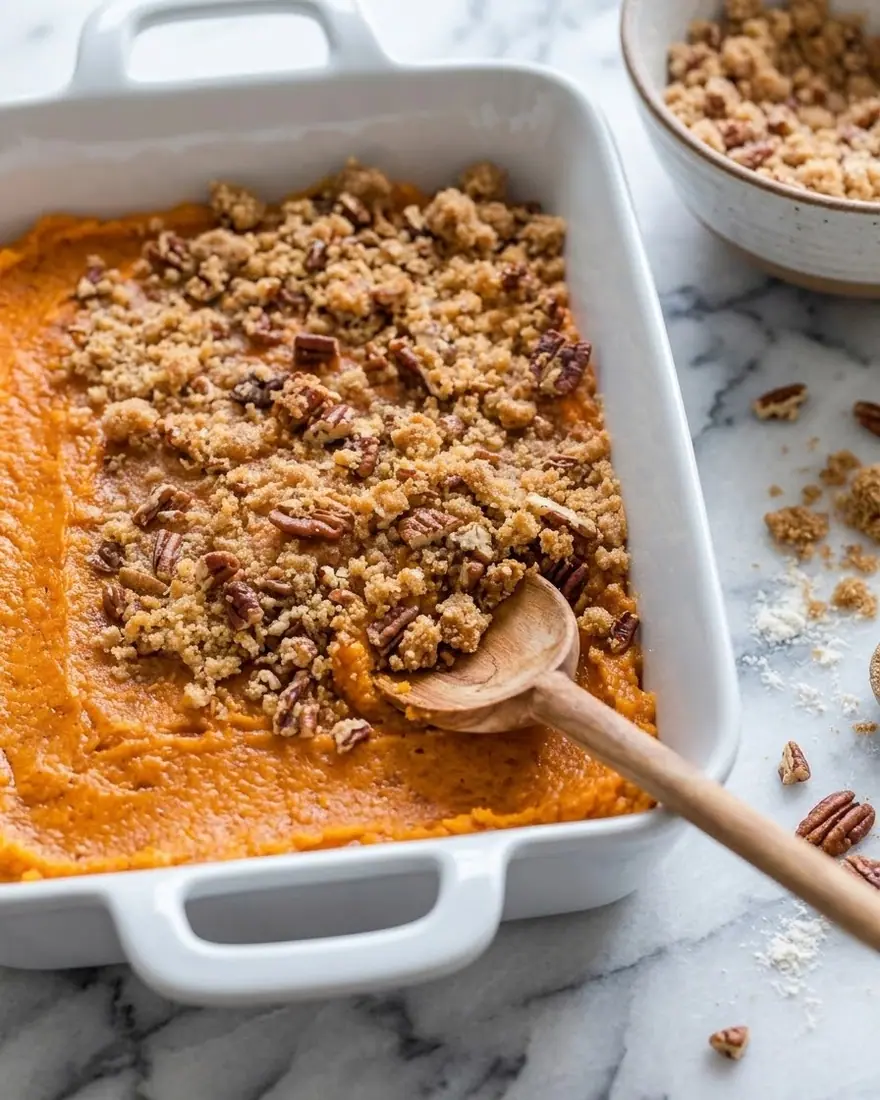
Step 5 — Make the pecan streusel topping: In a medium bowl, whisk together flour, 1/2 cup brown sugar, and cinnamon until no lumps remain.
Pour 1/3 cup melted butter over the dry mixture and fold with a silicone spatula until crumbly. Add pecan halves and fold until totally combined and no dry pockets remain.
This should look like wet sand with pecans scattered throughout. If it seems dry, the butter didn’t distribute evenly—fold a few more times. No dry pockets of flour should be visible.
Step 6 — Distribute topping and bake until golden: Spoon the pecan streusel topping evenly over the sweet potato layer, distributing pecans in an even layer.
Bake at 350°F (177°C) for 30 to 40 minutes until the topping is golden brown and the edges bubble slightly.
At 30 minutes, peek in and check the color. The pecans should turn deep golden, not burnt. You’ll see small bubbles at the edges—that’s the custard setting underneath. If the topping is browning too fast, tent loosely with foil.
Step 7 — Cool briefly on the counter: Remove the casserole from the oven and allow it to cool on the counter for 5 minutes. The residual heat will continue to set the filling gently without overcooking.
This resting period is crucial. It stops the cooking without letting everything get cold and dense. The filling firms up slightly so it holds together when you serve.
Step 8 — Add finishing touches if desired: Top with a small pinch of fresh thyme or rosemary sprigs and a light sprinkle of flaky sea salt if desired for brightness and visual appeal.
Fresh herbs and sea salt aren’t required, but they add sophistication and cut through the sweetness. Skip them for a traditional version.
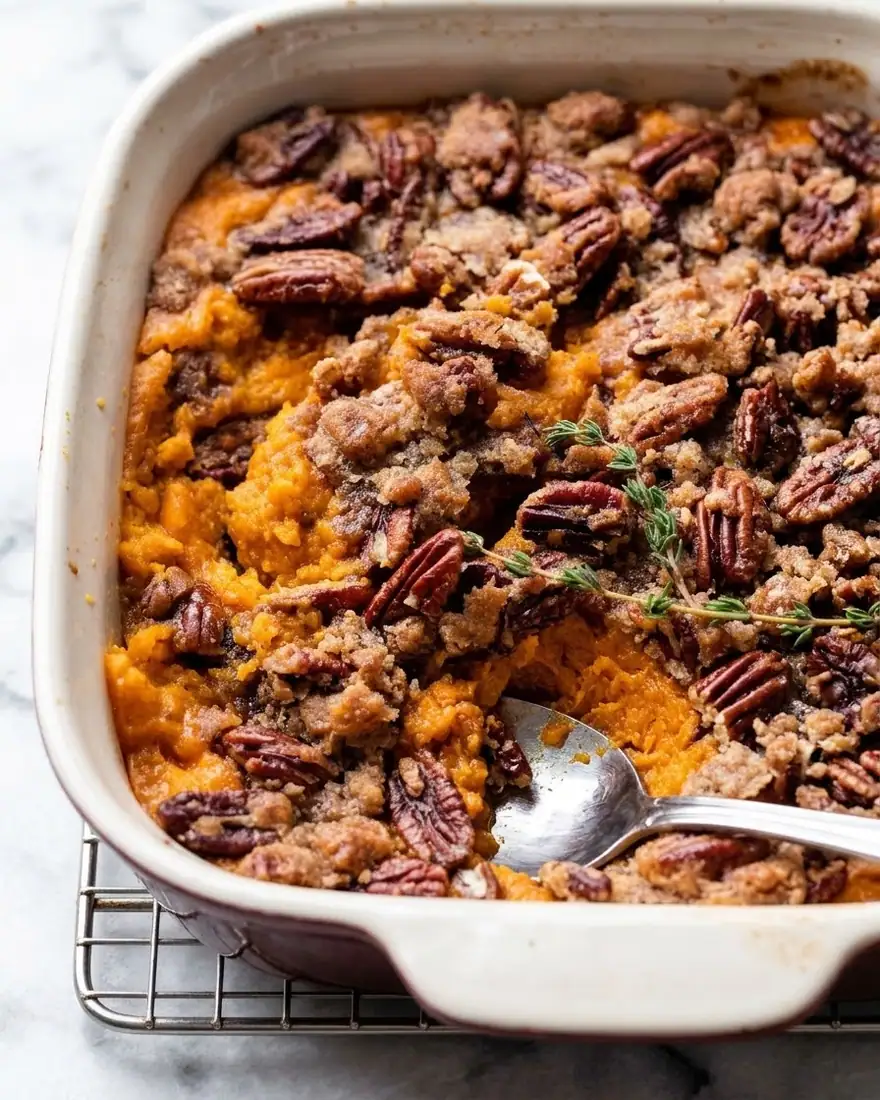
Step 9 — Serve warm and store leftovers properly: Serve warm directly from the pan or transfer to a serving dish. This casserole is best enjoyed within 2 hours of baking but reheats beautifully.
If you’re holding it for a buffet, keep it covered loosely with foil in a warm spot (not hot—you don’t want the topping to burn). Leftovers taste just as good the next day reheated gently.
Expert Tips for the Best Results
Use the right pan: A heavy-gauge light-colored aluminum 9×13-inch baking dish distributes heat evenly and prevents dark browning on the edges. Glass bakes faster; adjust your oven temperature down 25°F if using glass.
Don’t skip the cooling step for potatoes: Those 15 minutes of cooling let them firm up just enough to mash without falling apart. If you mash them hot, they’ll be gluey.
Pack your brown sugar firmly: This sounds fussy, but packed brown sugar (100g per 1/2 cup) has way more molasses depth than loosely scooped. Use a dry measuring cup and press down with your fingers.
Toast stale pecans before using: If your pecans have been open for weeks, spread them on a small baking sheet and toast at 325°F for 3 to 4 minutes. They’ll taste fresher and crunchier in the finished casserole.
Assemble the night before for easiest hosting: Cover the unbaked casserole tightly with plastic wrap, refrigerate overnight, then bake straight from cold. Add just 5 minutes to the baking time—no thawing needed.
What to Serve With It
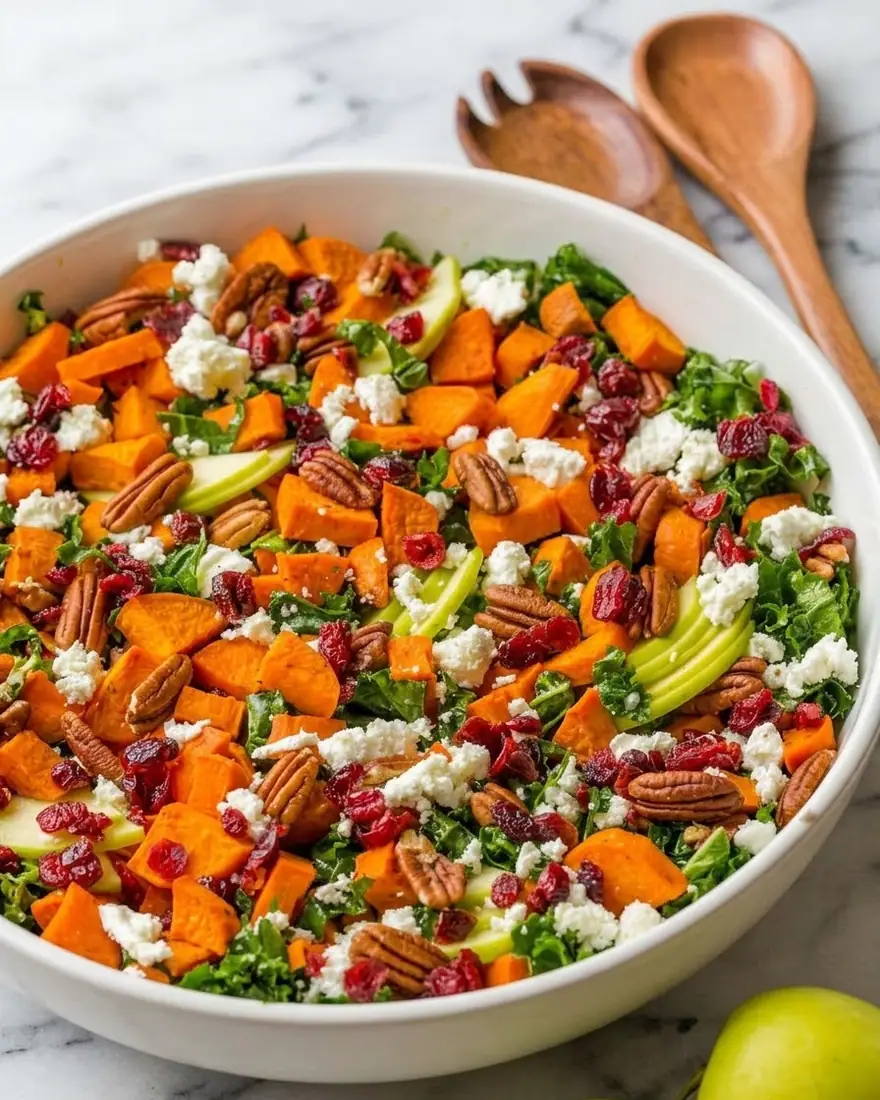
This casserole shines alongside savory mains and bright sides. I always build my holiday plate with contrast—something creamy next to something crisp, something rich next to something acidic.
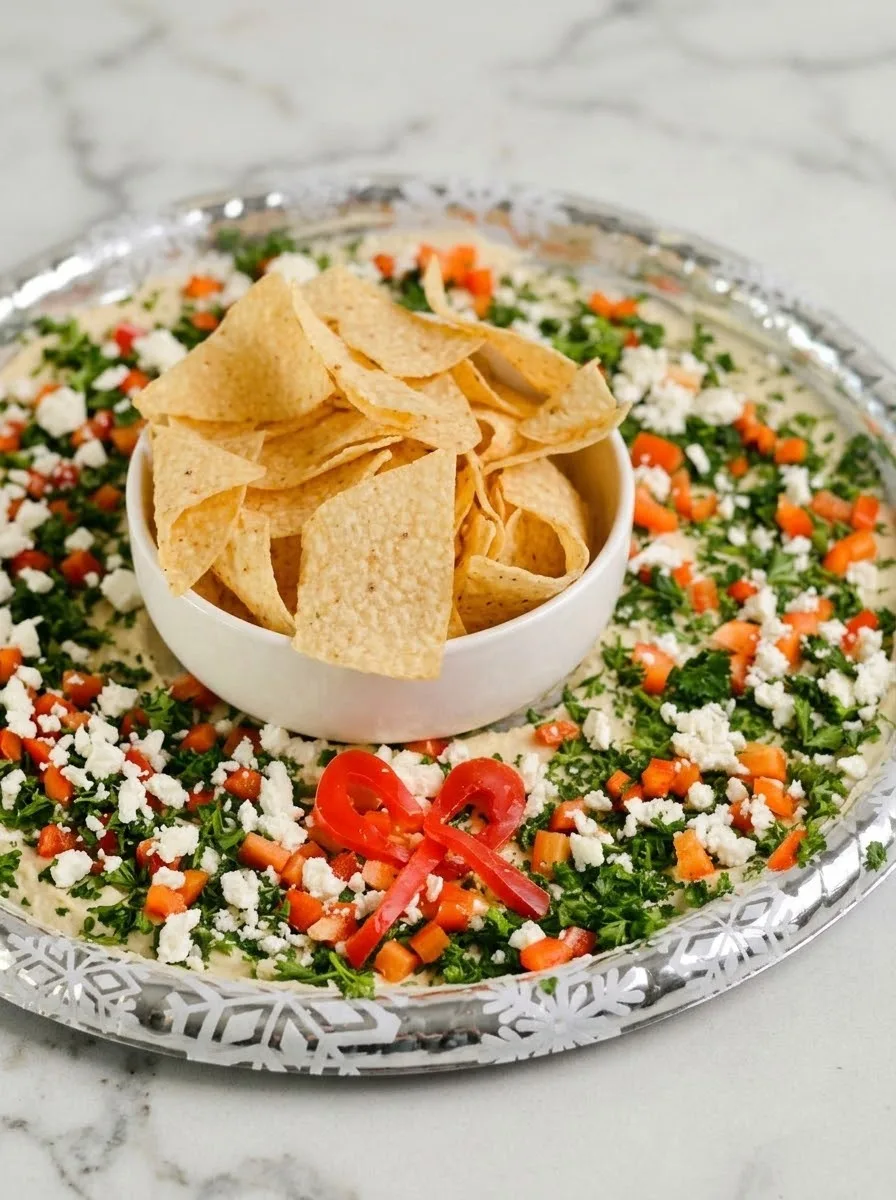
If you’re looking for show-stopping appetizers to anchor your menu before the main course, pair this with an Christmas Wreath Appetizer Platter for veggie-forward elegance.
Or set out an Almond and Rosemary Pine Cone Christmas Cheese Ball for savory bites with similar nutty warmth.
Herb-roasted turkey or ham—the salty, smoky richness balances the sweet potato filling perfectly. The pecans echo the deep caramelization on the meat.
Tangy cranberry sauce or a bright citrus slaw—acidic sides cut through the richness and cleanse the palate between bites. I always have a small bowl of unsweetened cranberry relish nearby.
Buttered dinner rolls or cornbread—soft carbs soak up the filling and give you something to push the casserole onto for easier eating. Warm rolls + this casserole is unbeatable.
Wilted mustard greens or roasted Brussels sprouts with garlic—bitter or umami-forward vegetables add depth and prevent the plate from feeling one-note sweet.
Make-Ahead, Storage & Reheating
Yes, absolutely make this the night before Christmas. I do it every single year. Assemble the casserole completely—both the filling and the streusel topping—cover it tightly with plastic wrap, and refrigerate overnight.
When you’re ready to bake on Christmas Day, don’t thaw it. Bake straight from the fridge at 350°F (177°C) for 35 to 45 minutes (about 5 minutes longer than the room-temperature version). The filling and topping will bake perfectly.
Airtight Fridge Storage: Leftover casserole keeps in the refrigerator for up to 4 days covered loosely with foil or transferred to an airtight container.
The filling stays creamy and the topping stays crisp if you don’t seal it too tightly (moisture gets trapped).
Freezer Storage: You can freeze the unbaked casserole (assembled but not baked) for up to 3 months. Wrap it very tightly in plastic wrap and then foil. Add 10 to 12 minutes to the baking time straight from frozen.
Reheating without drying out: Preheat your oven to 325°F (163°C). Cover the casserole loosely with foil and reheat for 15 to 20 minutes until warmed through.
Remove foil for the last 3 minutes if you want to re-crisp the topping. Never microwave—it’ll turn the topping soggy.
Counter holding for a buffet: If you’re keeping the casserole warm for up to 2 hours before serving, tent it loosely with foil and keep it in a low oven (200°F / 93°C).
Stir it gently every 20 minutes so the bottom doesn’t brown too dark.
Frequently Asked Questions
Can I peel and cut the sweet potatoes ahead of time?
Yes, peel and cut them up to 8 hours before boiling. Store them in a container of cold water in the refrigerator to prevent browning (they oxidize quickly when cut).
Drain and boil them straight from the fridge. The water content is slightly higher, but baking time stays the same—just watch the texture as they mash.
What if my sweet potato mash looks watery after draining?
This happens sometimes, especially with very starchy potatoes. After draining, let them sit in a fine-mesh strainer lined with cheesecloth for 5 minutes to release extra moisture.
Or line your bowl with a clean kitchen towel, mash the potatoes into it, and gently press to extract water before transferring to your mixing bowl. You want about 4 cups of mashed potato.
Can I use canned sweet potato puree instead of fresh?
Technically yes, but I don’t recommend it. Canned puree is thinner and much wetter—you’d need to drain it very thoroughly and might still need less cream in the filling.
Fresh boiled potatoes give you better control over texture and taste noticeably better. If you’re truly short on time, canned works in a pinch, but reduce heavy cream to 1/4 cup and watch the baking time closely.
Why does my streusel topping sink into the filling?
This usually means the filling is too warm or too wet when you add the topping. Make sure the filling has cooled to room temperature in the baking dish before topping it.
Also, make sure your streusel mixture is well combined with no dry pockets of flour—those dry areas absorb moisture from the filling and shift. Fold it thoroughly until it looks like wet sand.
Is there a way to make this less sweet?
Reduce the packed brown sugar in the filling to 1/3 cup (67g) instead of 1/2 cup. Keep the topping streusel at full strength—that contrast is what makes the dish interesting.
You can also add 1/4 teaspoon nutmeg or ginger to the filling for spice complexity that distracts from pure sweetness. The flaky sea salt garnish also cuts through sugar beautifully if you use it.
Sweet Potato Casserole with Brown Sugar Pecan Streusel
Ingredients
Method
- Place peeled sweet potatoes in a large pot and cover completely with cold water. Bring to a rolling boil over high heat, then reduce to medium-low and simmer for 20 minutes until fork-tender. Drain thoroughly and cool for 15 minutes until safe to handle.
- While potatoes cool, preheat oven to 350°F (177°C). Grease a 9×13-inch baking pan with butter or cooking spray and set aside on the counter.
- Transfer cooled sweet potatoes to a large mixing bowl. Using a handheld mixer on medium speed, beat until relatively smooth with some small chunks remaining for texture, approximately 2 minutes. You should have about 4 cups of mashed potatoes.
- Add melted butter, 1/2 cup brown sugar, beaten eggs, heavy cream, vanilla extract, and salt to the mashed sweet potatoes. Fold gently with a spatula until completely combined, then spoon and spread evenly into the prepared 9×13-inch pan.
- In a medium bowl, whisk together flour, 1/2 cup brown sugar, and cinnamon until no lumps remain. Pour 1/3 cup melted butter over the dry mixture and fold with a silicone spatula until crumbly. Add pecan halves and fold until totally combined and no dry pockets remain.
- Spoon the pecan streusel topping evenly over the sweet potato layer, distributing pecans in an even layer. Bake at 350°F (177°C) for 30 to 40 minutes until the topping is golden brown and the edges bubble slightly.
- Remove the casserole from the oven and allow it to cool on the counter for 5 minutes. The residual heat will continue to set the filling gently without overcooking.
- Top with a small pinch of fresh thyme or rosemary sprigs and a light sprinkle of flaky sea salt if desired for brightness and visual appeal.
- Serve warm directly from the pan or transfer to a serving dish. This casserole is best enjoyed within 2 hours of baking but reheats beautifully.
Nutrition
Notes
- Night-Before Make-Ahead: Prepare the sweet potato base and streusel topping separately. Store base covered in the prepared pan and topping in an airtight container in the refrigerator for up to 24 hours. On baking day, spoon the cold topping over the cold base and bake at 350°F (177°C) for 40–45 minutes, checking at 35 minutes.
- Freezing up to 3 Months: Assemble the casserole completely, cool to room temperature, then wrap tightly with plastic wrap and aluminum foil. Label with the date. Thaw overnight in the refrigerator, then reheat covered at 325°F (163°C) for 20–25 minutes until warmed through.
- Best Ingredient Swap: Replace heavy cream with an equal amount of whole milk or additional half-and-half for a lighter texture. The casserole will be slightly less rich but equally creamy and smooth.
- Pan & Reheating Tip: Use a heavy-gauge aluminum or steel 9×13-inch pan to ensure even baking and prevent dark edges. Reheat leftovers covered at 325°F (163°C) for 15–20 minutes until steaming; never microwave, as this dries out the filling.